
Table of Contents
- How Backyard Water Features Transform Your Outdoor Space
- Visual Appeal and Curb Appeal Benefits
- Backyard Water Feature Ideas for Every Layout
- Small Backyard Water Features That Make an Impact
- Water Feature Maintenance: What to Expect Year-Round
- Water Features and Home Value: What Buyers Notice
- Creating Your Ideal Backyard Water Feature
- Frequently Asked Questions
Last Updated: October 10, 2026
How Backyard Water Features Transform Your Outdoor Space
Backyard water features transform ordinary yards into sophisticated retreats by creating focal points that anchor your entire outdoor living space. At BellaFina Outdoors, we've worked with homeowners, contractors, and designers throughout Southern California to understand why these elements improve property aesthetics and quality of life.
Water features work as visual anchors that draw the eye and establish purpose in your outdoor environment. The right feature becomes the centerpiece that ties your landscape design together, transforming a blank patio into a destination and a generic lawn into a curated outdoor room.
Visual Appeal and Curb Appeal Benefits
A well-designed water feature creates visual interest from multiple angles, inside looking out, from the patio, and from the street. The interplay of light on water, movement, and surrounding landscaping combine to create a polished appearance that signals quality and care.
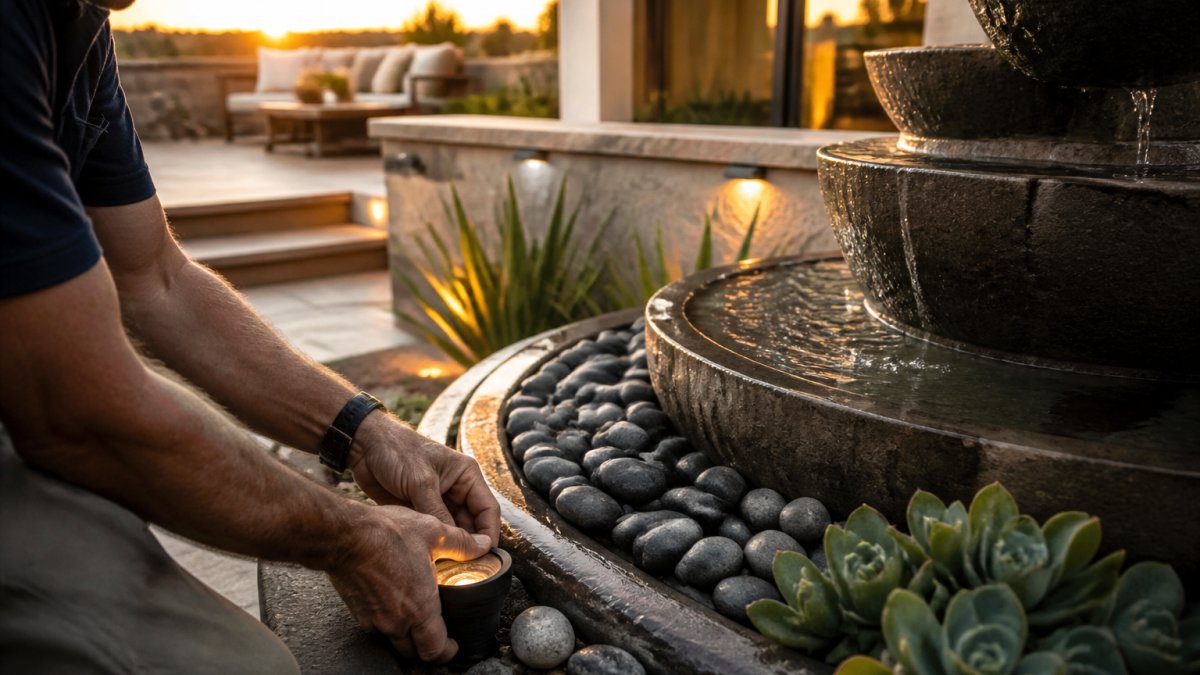
Properties with thoughtfully designed outdoor spaces featuring water elements command attention in the market. A fountain, waterfall, or fire-and-water feature creates an immediate sense of sophistication that makes your home memorable.

Backyard Water Feature Ideas for Every Layout
Water feature versatility only matters if the feature fits your actual site. Feature selection isn't just about style, it's about matching scale, placement, and architectural character to your property's specific conditions.
Understanding scale and sightlines first
Assess your outdoor space from the angles that matter most: from your primary living areas, entry approach, and patio. A feature should occupy roughly 5-15% of your primary viewing area, large enough to anchor attention without overwhelming the space.
Position your feature where it's visible from your kitchen window, main seating area, and entry to create multiple moments of visual engagement. A feature hidden behind a fence becomes an afterthought rather than an anchor.
Matching architectural style and material character
Your home's architectural language should guide feature selection. Contemporary homes suit minimalist concrete bowls or linear water channels; traditional or Mediterranean homes benefit from classical fountain forms or stacked stone. Mismatched features read as disconnected add-ons.
Material selection reinforces architectural fit. Concrete, stone, metal, and tile finishes should echo materials already present in your landscape or home exterior to create visual continuity.
Feature types and their practical fit
Fountains and bowls work best in smaller to mid-sized yards. Pedestal fountains suit traditional landscapes and require minimal installation. Modern concrete or metallic bowls complement contemporary design and are the easiest to relocate if your landscape plan changes.
Waterfall features create dramatic focal points ideal for larger yards. Stacked stone or architectural concrete integrate well with retaining walls and hillside properties. They require proper grading and pump sizing but deliver unmatched visual drama, especially on properties with natural elevation changes.
Fire-and-water features combine two elements for maximum sensory appeal and work well as primary focal points in mid to large yards. They require electrical and gas infrastructure, so placement should account for utility access and safety clearances.
Ponds and water gardens require the most space and maintenance but attract wildlife and create tranquility. They suit larger properties and require proper grading, liner installation, and ongoing biological balance management.
Practical constraints that shape your choice
Assess your site's practical realities: electrical access, soil drainage, space without compromising circulation, and overhead utilities or underground systems that limit placement.
Your maintenance commitment shapes the decision. A simple fountain requires weekly water-level checks and monthly filter cleaning; a pond demands biological monitoring; a fire-and-water feature adds gas-line inspection. Choose a feature type that matches your realistic willingness to maintain it.
Small Backyard Water Features That Make an Impact
Limited space doesn't mean limited options. Small water features often deliver outsized impact when positioned correctly as the primary visual anchor.
Concrete water bowls, tabletop fountains, or wall-mounted features work well in compact yards, occupying minimal floor space while creating focal-point impact.
Small features work best as the primary visual anchor in compact yards, becoming the destination that draws people outside.
Water Feature Maintenance: What to Expect Year-Round
Understanding maintenance requirements helps you choose a feature you'll actually enjoy. Water features require seasonal attention, regular cleaning, and monitoring of water levels and pump function. The effort is manageable but non-negotiable if you want your feature to remain beautiful and functional.
| Maintenance Task | Frequency | Effort Level | Impact |
|---|---|---|---|
| Water level checks | Weekly | Minimal | Prevents pump damage |
| Filter cleaning | Monthly | Low | Maintains water clarity |
| Debris removal | As needed | Low | Prevents clogging |
| Seasonal winterization | Once yearly | Moderate | Protects equipment |
| Professional inspection | Annually | None (outsourced) | Catches issues early |
Concrete and stone features require periodic sealing to prevent staining and water absorption. Pumps and electrical components need protection from freezing temperatures in colder climates. The good news: most maintenance is straightforward and doesn't require specialized expertise.
24" Roma GFRC Concrete Planter & Water BowlOPT-ROMPW24 →
Water Features and Home Value: What Buyers Notice
Buyers recognize quality outdoor design, and a professionally installed water feature signals that a property has been thoughtfully maintained and upgraded.
What actually influences buyer perception
Buyers notice features that appear intentional, well-maintained, and integrated into broader landscape design. A water feature that looks hastily added, neglected, or out of place with the home's architectural style actually detracts from perceived value. This is why positioning, material quality, and maintenance matter so much.
The strongest value proposition comes from features integrated into cohesive outdoor living design. A water feature that anchors a patio with complementary landscaping, lighting, and furnishings creates a unified outdoor room that buyers perceive as a complete, intentional space.
The resale-value reality
Research on outdoor improvements and home value shows mixed results. Outdoor living improvements can return a portion of their investment at resale, but this varies significantly by market, property type, and how well the feature is integrated into the overall landscape.
Market context matters enormously. In competitive real estate markets where outdoor living space is a strong buyer preference, such as many properties in Orange County and Southern California, a well-designed water feature can be a meaningful differentiator.
Property type also shapes the equation. A water feature in a luxury home's landscape is expected and contributes to the overall aesthetic. The same feature in an entry-level property might represent an investment that doesn't align with buyer expectations or budgets for that market segment.
Maintenance and perception: The hidden value factor
A neglected water feature becomes a liability quickly. Algae growth, mineral deposits, pump failures, and cracked concrete or stone read as deferred maintenance to buyers. A feature that appears broken or abandoned actually reduces buyer confidence in the property's overall upkeep.
Buyers also assess the ongoing cost and effort of maintaining outdoor features. If your water feature requires specialized maintenance, significant water use, or expensive repairs, buyers factor that into their offer calculations. Transparency about maintenance requirements and realistic upkeep costs protects your value proposition.
Making the value case realistic
If you're considering a water feature partly for resale value, frame your investment decision around these factors:
- Integration: Is the feature part of a cohesive outdoor living design, or is it a standalone addition? Integrated features contribute more to perceived value.
- Maintenance condition: Can you commit to keeping the feature clean, functional, and visually appealing year-round? A neglected feature reduces value.
- Market fit: Does your local market value outdoor living features? In competitive markets with strong outdoor-living demand, features contribute more meaningfully to buyer appeal.
- Property segment: Does the feature align with buyer expectations for your property type and price range? A luxury feature in an entry-level home may not resonate with your actual buyer pool.
- Water and energy efficiency: Features that minimize water waste and electrical consumption appeal to environmentally conscious buyers and reduce long-term ownership costs.
The honest answer: water features improve curb appeal and buyer perception when they're well-designed, well-maintained, and integrated into broader outdoor living improvements. They're not a guaranteed value multiplier, but they're a meaningful component of a thoughtfully designed outdoor space that buyers recognize and appreciate.
Creating Your Ideal Backyard Water Feature
The design process starts with understanding your site, your aesthetic preferences, and your practical constraints. At BellaFina Outdoors, our team helps clients visualize their projects through detailed renderings before any construction begins. This approach eliminates guesswork and ensures the final result matches your vision.
Consider these factors as you plan: the visual sightlines from inside your home and from the entry approach, the scale relative to your outdoor space, your landscape style and existing architectural finishes, maintenance requirements and your realistic commitment level, and water and electrical infrastructure needs.
Working with a design center that maintains a physical showroom gives you a significant advantage. You can see product quality, scale, and material finishes in person rather than relying on photos. Our Huntington Beach location allows contractors, designers, and homeowners to collaborate on specifications, material selections, and design details in real time.
The most successful backyard water features aren't the biggest or most expensive, they're the ones that fit their setting perfectly and receive proper maintenance. Whether you're drawn to a simple concrete bowl, a dramatic waterfall, or a fire-and-water combination, the right choice depends on your space, your style, and your commitment to the project.
Transforming your backyard into a space that genuinely improves your daily life requires more than product selection, it requires thoughtful design and quality installation. At BellaFina Outdoors, we combine premium water features and outdoor living products with expert visualization services to help you plan confidently before construction begins. Our team in Huntington Beach works with homeowners and professionals throughout Southern California to bring outdoor visions to life. Visit our design center to explore water features, fire elements, and architectural finishes in person, or contact us to discuss your project vision.
Frequently Asked Questions
Do backyard water features really add value to a home?
Backyard water features enhance curb appeal and create attractive focal points that appeal to potential buyers, though the value increase depends on quality, design integration, and maintenance. High-end features like fire and water bowls or professionally designed fountains positioned as landscape centerpieces tend to make stronger impressions than basic options. The visual impact and outdoor living appeal they create can influence buyer perception, especially in markets where outdoor spaces are valued. Proper installation and maintenance are essential to realize any potential benefit.
What type of water feature works best in a small backyard?
Compact water features like tabletop fountains, wall-mounted cascades, or small planter bowls work well in tight spaces without overwhelming the area. The 24-inch Roma water bowl, for example, provides visual interest and soothing water sounds in an 800-square-foot yard without consuming valuable patio or seating space. Consider your layout, existing hardscape, and architectural style when selecting size and style. Vertical features and corner placements maximize impact while preserving usable outdoor living area.
How much maintenance does a backyard water feature require?
Maintenance varies by feature type but typically involves regular cleaning, water level checks, filter cleaning, and seasonal winterization in colder climates. Fountains and water bowls need weekly water top-offs and monthly debris removal. Pumps require periodic inspection, and in winter, you may need to drain lines or add antifreeze depending on your climate. Concrete and stone finishes benefit from occasional sealing. Professional installation and quality components reduce long-term maintenance headaches and ensure reliable operation.
Can a water feature work in a small yard without looking out of place?
Yes, when scaled appropriately and positioned as a focal point. A well-chosen small backyard water feature draws the eye and anchors the space, making the yard feel intentional and designed rather than cramped. The key is proportion: a 24-inch fountain in an 800-square-foot yard feels balanced, while an oversized feature can dominate. Coordinate the style with your home's architecture and existing landscape finishes. Professional design visualization helps confirm scale and placement before installation.