
Table of Contents
- Why Outdoor Fire Feature Safety Matters
- Fire Pit Clearance Requirements: Distance From Structures
- Best Materials for Fire Pit Base: Foundation and Surface Stability
- Fuel Types and Safe Usage Practices
- How to Maintain a Gas Fire Pit: Inspection and Care
- Weather, Wind, and Supervision Requirements
- Extinguishing and Post-Fire Disposal
- Deck-Specific Safety Systems and Fire Pit Covers
- Frequently Asked Questions
Last Updated: September 2, 2026
Why Outdoor Fire Feature Safety Matters
A backyard fire feature transforms an outdoor space into a gathering place, extending your living season and drawing people together. But fire features demand respect. Every year, preventable accidents injure homeowners and damage properties because safety fundamentals get overlooked during design and setup.
This guide covers essential outdoor fire feature safety: clearance requirements, fuel safety, weather conditions, and proper extinguishing methods. Whether you're working with a contractor or managing the project yourself, understanding these basics protects your investment and your family. Most risks are preventable through thoughtful design and consistent safety protocols.
Fire Pit Clearance Requirements: Distance From Structures
Safe distance from structures is the foundation of fire feature safety. Building codes exist from decades of incident data, and clearance requirements depend on what surrounds your fire feature.
Horizontal Clearance From Buildings and Decks
Most jurisdictions require a minimum of 10 feet of horizontal clearance from buildings, decks, fences, and other combustible structures (nfpa.org). Some areas enforce 15 feet for larger fire features or in fire-prone regions.
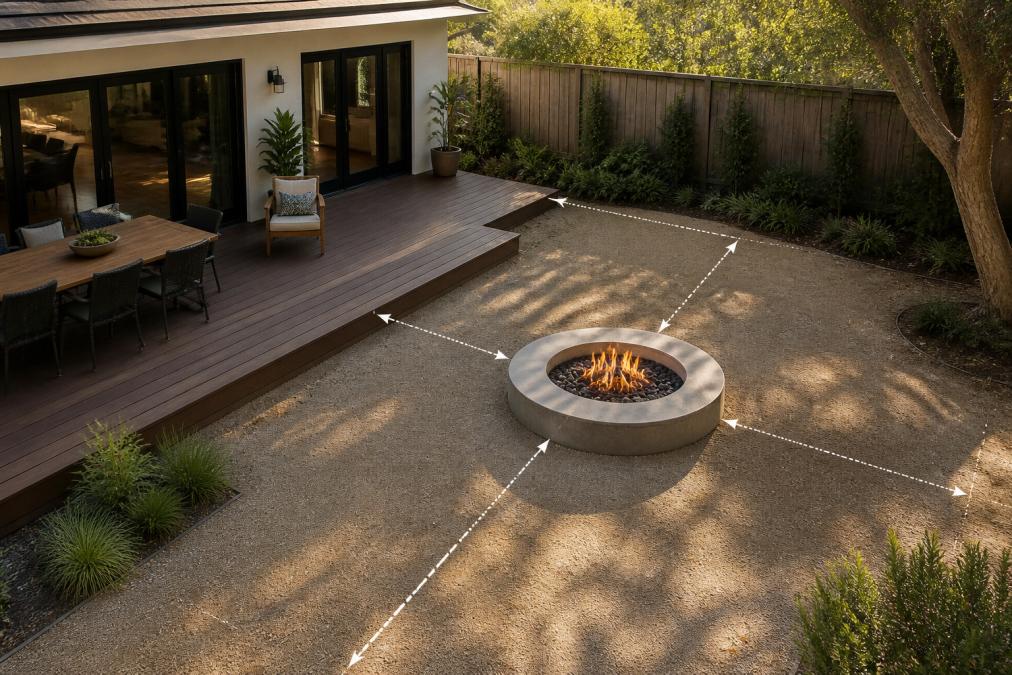
Check your local fire code before finalizing placement. Orange County and Southern California fire departments have specific ordinances, and some homeowner associations enforce stricter rules than baseline code. Decks deserve special attention, wooden decks are combustible, and heat radiating from a nearby fire feature can cause wood to ignite even without direct flame contact. Position the fire feature well away from decks, ideally 15 feet or more. If space is tight, a fire pit screen or spark arrestor reduces ember escape, but it doesn't replace proper distance.
Fences, gazebos, and pergolas also count as structures. A wooden fence 10 feet away can be damaged by sustained radiant heat. If you want to preserve a fence line, move the fire feature farther out or consider a non-flammable barrier.
Vertical Clearance and Overhead Hazards
Vertical clearance is just as important as horizontal distance. Tree branches, pergola beams, patio covers, and roof overhangs above the fire feature create fire hazards. Most codes require 12 feet of vertical clearance above the flame height (nfpa.org). For wood-burning fire pits with flames reaching 3 to 4 feet, you need at least 15 to 16 feet of clear space above. Gas fire features typically produce lower flames (2 to 3 feet), but the same principle applies.

Trim back any overhanging vegetation before lighting the fire feature. Pergolas and patio covers trap heat and smoke, creating a direct path to ignition. Either relocate the fire feature outside the covered area or remove the covering directly above it.
Best Materials for Fire Pit Base: Foundation and Surface Stability
The ground beneath your fire feature must be stable, non-flammable, and properly prepared.
Non-Flammable Base Options
Your fire pit base should sit on non-flammable material. Common options include:
- Gravel or pea rock: Inexpensive and permeable, but requires raking. Larger gravel (3/4 inch or bigger) resists displacement better.
- Pavers or concrete: Durable, stable, and easy to clean. Concrete can crack from extreme heat cycles, so leave expansion room around the pit.
- Fire-rated brick or stone: Attractive and permanent. Ensure materials are rated for high heat.
- Metal grates or fire pit rings: Create a defined boundary and allow airflow underneath.
Avoid wood chips, bark mulch, or landscape fabric anywhere near the fire feature. These materials ignite easily and spread fire into surrounding plantings.
Ground Preparation and Even Surface
An uneven surface causes fire pits to tip and gas features to leak. Before installation, level the ground and compact it. Remove rocks, roots, and debris that could create a wobble.
For wood-burning pits, dig down slightly to create a contained fire bowl. A 2- to 4-inch depression works well for most residential fire pits. Make sure the base extends at least 2 feet beyond the fire pit's perimeter to prevent ground fire if embers fall outside the pit.
Fuel Types and Safe Usage Practices
The fuel you burn determines how your fire feature operates and what safety precautions matter most.
Wood-Burning Fire Pits vs. Gas Fire Features
Wood-burning fire pits create authentic flame and ambiance but produce embers, ash, and smoke. Gas fire features offer cleaner burning and easier control but require proper fuel supply and maintenance.
Wood-burning pits demand active attention. Use seasoned hardwood only, wet or green wood produces excessive smoke and sparks. Avoid treated wood, plywood, particle board, or scrap wood, which release toxic fumes and ignite unpredictably. Never leave a wood-burning fire unattended. Keep children and pets away from the fire pit while it's burning.
Gas fire features don't produce flying embers, but they carry fuel-supply hazards. Regular inspection and maintenance are essential. The Outdoor Plus Fire & Water Features offers a range of gas fire pits and fireplaces designed with safety and performance in mind, and our team at BellaFina can help you select the right model for your space and needs.
Propane Tank and Natural Gas Line Safety
Keep propane tanks at least 10 feet away from the fire feature itself, away from doors and windows, and in a well-ventilated area. Never store a propane tank indoors.
Inspect the tank regularly for rust, leaks, or damage. A hissing sound near the tank connection indicates a gas leak, turn off the valve immediately and contact your propane supplier.
Have a licensed contractor install any gas lines. Gas lines must meet local code, be properly graded to prevent water pooling, and be marked clearly so they're not accidentally damaged during future yard work.
Before each season, test gas connections for leaks using soapy water. Apply the solution to all connection points and look for bubbles. If you see bubbles, tighten the connection or have a technician inspect it.
How to Maintain a Gas Fire Pit: Inspection and Care
Gas fire features require seasonal inspection and maintenance to operate safely.
Inspect your burner and flame pattern at the start of each season. All burner ports should produce flame. If some ports don't ignite, debris or mineral deposits are blocking them. Turn off the gas, let the burner cool, and gently clean the ports with a small brush or compressed air. Never use a wire brush.
Check the ignition system. If your fire feature has electronic ignition, test it before you need it. Replace batteries annually and keep contacts clean and dry.
Inspect all visible gas lines for cracks, corrosion, or loose fittings. Tighten any loose connections with a wrench. If you see cracks or serious corrosion, stop using the feature and call a technician.
Request a Design Consultation →
Look for water pooling near the gas line or burner area. Standing water corrodes metal and can damage the ignition system. If drainage is poor, grade the area to direct water away.
Test the on-off valve and control knobs. They should turn smoothly without sticking. At the end of the season, cover the fire feature to protect it from rain and debris.
Weather, Wind, and Supervision Requirements
Fire features are outdoor equipment, and weather conditions directly affect safety.
Wind Speed and Burn Ban Conditions
Wind is the enemy of fire safety. Strong winds push flames sideways, carry embers far from the fire pit, and make it harder to control the fire. Never use your fire feature on windy days. Most fire codes recommend not operating fire pits when sustained wind speeds exceed 15 miles per hour (the CDC).
Check the weather forecast before you light a fire. If wind picks up while you're using the fire feature, extinguish the fire.
Some jurisdictions issue burn bans during dry seasons or high fire danger periods. Check with your local fire department or county website for current burn ban status. In Southern California, burn ban season typically runs from late spring through early fall, depending on drought conditions and fire danger.
Unattended Fire Hazard Prevention
Never leave a fire feature burning unattended. An unattended fire can spread, embers can ignite nearby combustibles, and you won't be there to respond if something goes wrong.
Set a time limit for fire use. Most homeowners find that 2 to 4 hours is a comfortable duration for a fire gathering. Plan to extinguish the fire before sunset or before you go inside for the evening.
Keep children and pets supervised at all times when the fire is burning. Establish a "no-go zone" around the fire pit, at least 10 feet away, where children and pets are not allowed without adult supervision.
Extinguishing and Post-Fire Disposal
How you extinguish a fire matters as much as how you light it.
Safe Extinguishing Methods and Fire Suppression Equipment
For wood-burning fires, water is the most reliable extinguishing agent. Use a garden hose to spray water directly on the flames and coals until all visible fire is out. Keep spraying until the coals are completely cold to the touch, usually 10 to 15 minutes.
For gas fire features, turn off the gas valve. The flame should extinguish immediately. If it doesn't, don't attempt to relight it, call a technician to inspect the feature.
Have fire suppression equipment accessible before you light the fire. Keep a garden hose connected and ready, or position a bucket of water or sand near the fire pit. A fire extinguisher (Type ABC) is a good backup for small flare-ups.
Ash Disposal and Ember Management
After the fire is completely extinguished, let the ashes cool for at least 24 hours before disposal. Hot ash can reignite if it contacts combustible materials. Once cool, scoop the ash into a metal container with a tight-fitting lid and store it away from structures and vegetation.
Ash can be disposed of in your regular trash if your local waste management allows it. Check with your local waste management provider for guidelines.
Ember management during the fire prevents problems later. Use a fire pit screen or spark arrestor to reduce ember escape. These devices fit over the top of the fire pit and catch flying embers, reducing the risk significantly.
Deck-Specific Safety Systems and Fire Pit Covers
If your fire feature is near a deck, additional safety measures become important. Decks are particularly vulnerable to fire because they're made of wood and have underside cavities where fire can spread unseen.
Install a fire pit deck protector if your fire feature is within 15 feet of a deck. These are metal or composite barriers that reflect radiant heat away from the wood. A deck protector doesn't replace proper distance, but it reduces heat damage and adds a layer of safety.
Fire pit covers serve multiple purposes: they reduce ember escape, prevent rain from entering the fire feature, and allow you to store the pit when not in use. Metal covers work best, they're durable and don't degrade from heat exposure. When you're not using the fire feature, keep it covered to prevent water pooling and debris accumulation.
Outdoor fire features add warmth, ambiance, and gathering space to your backyard. The safety practices outlined here, clearance distances, proper materials, fuel management, weather awareness, and careful extinguishing, aren't restrictions on enjoyment. They're the foundation that lets you use your fire feature confidently, year after year, without incident.
At BellaFina Outdoors, we work with homeowners and contractors throughout Southern California to design fire features that are both beautiful and safe. Our outdoor living design and visualization services help you plan placement, clearance, and integration with the rest of your outdoor space before construction begins. If you're planning a fire feature and want expert guidance on safety, materials, or product selection, visit our Huntington Beach design center or contact our team to discuss your project.
Frequently Asked Questions
How far should a fire pit be from a house or structure?
Most fire safety guidelines recommend at least 15 feet of horizontal clearance between a fire pit and any structure, including your home, deck, shed, or fence. Check your local fire code for specific requirements in your area. Vertical clearance is equally important: keep flames at least 15 feet below tree branches, power lines, and roof overhangs. The greater the distance, the safer your setup.
What are the best materials for a fire pit base?
Use non-flammable materials like gravel, sand, or paver bases rated for heat exposure. Concrete pads or fire-rated stone work well. Avoid wood chips, mulch, or organic materials that can ignite. Ensure the ground is level and stable to prevent the fire pit from tipping. For premium fire features like the [Bayside Fire Pit](https://bellafina-outdoors.myshopify.com/products/bayside-fire-pit), manufacturer guidelines specify proper base preparation to maximize safety and longevity.
How do you properly extinguish a fire pit to prevent reignition?
Allow wood to burn down to ash, then use a shovel to spread embers across the base. Douse with water until hissing stops and the area is cool to touch. Stir ashes to release trapped heat. For gas fire pits, simply turn off the valve and let the burner cool. Never leave a fire unattended while cooling. Keep a fire extinguisher or garden hose nearby during use for emergency suppression.
What maintenance does a gas fire pit require?
Inspect your propane tank or natural gas line for leaks before each use. Check the burner for debris or blockages. Clean the glass or screen if your feature has one. Ensure all ignition components work properly. For premium gas fireplaces like the [84" Williams Outdoor Fireplace - Powder Coated Metal - Match Lit with Flame Sense](https://bellafina-outdoors.myshopify.com/products/84-williams-outdoor-fireplace-powder-coated-metal-match-lit-with-flame-sense) with Flame Sense technology, follow the manufacturer's maintenance schedule. Have a professional inspect gas lines annually to ensure safe operation and prevent gas hazards.
This article was written using GrandRanker