
Table of Contents
- Modular vs. Custom Outdoor Kitchens
- Essential Materials for Outdoor Kitchen Durability
- Custom Outdoor Kitchen Design in Orange County
- Built-in Appliances and Components
- Budgeting and Total Cost of Ownership
- Permitting, Installation, and Professional Coordination
- Outdoor Kitchen Trends and Design Considerations
Last Updated: August 24, 2026
Modular vs. Custom Outdoor Kitchens
When planning an outdoor kitchen, you're choosing between modular systems that arrive pre-built and ready to assemble, or custom installations designed specifically for your space. This distinction shapes your timeline, flexibility, and how well the final result fits your yard.
Modular outdoor kitchens use prefabricated stainless steel cabinets, integrated grills, and countertop sections that bolt together on-site. You're limited to manufacturer configurations, but assembly takes days rather than weeks. This works well for straightforward spaces with clear budgets and predictable timelines.
Custom outdoor kitchens are built around your specific layout, materials, and vision. A designer works with you on placement, appliance selections, and integrated features like pizza ovens or beverage coolers. This flexibility comes with longer design timelines, higher costs, and coordination between multiple trades. The result integrates seamlessly with your landscape and reflects your actual needs.
The decision hinges on three factors: design flexibility needed, timeline tolerance, and whether your space has unusual dimensions or site challenges. A standard rectangular patio suits modular well. A sloped lot, existing pool integration, or specific material palette usually demands custom work.
Essential Materials for Outdoor Kitchen Durability
Material selection directly impacts maintenance burden, safety, and functionality. This isn't about aesthetics alone.
Countertops and Work Surfaces
Granite and engineered quartz are industry standards because they withstand temperature swings, resist staining, and handle daily cooking. Granite requires annual sealing to prevent water absorption and staining. Quartz is non-porous and requires less maintenance. Concrete countertops offer a contemporary look but are softer and require regular sealing. They're prone to cracking in freeze-thaw cycles unless properly reinforced.
Cabinetry and Structural Materials
Stainless steel cabinetry resists rust and corrosion far better than painted wood, which deteriorates quickly in coastal and humid environments. In Southern California near the coast, stainless steel isn't optional, it's necessary. Powder-coated steel cabinets are cheaper but require vigilant maintenance and repainting every few years.
Tile and Paving Materials
Porcelain pavers are your best choice for outdoor kitchen flooring. They resist moisture absorption, handle freeze-thaw cycles without cracking, and maintain appearance for decades. BellaFina Outdoors carries several porcelain paver options like Quarstone-24x24 - 2cm Pavers and Slaterock-24x24 - 2cm Pavers that deliver authentic stone aesthetics without the maintenance headaches of natural stone.
Natural stone looks beautiful but requires sealing, can be slippery when wet, and stains easily. Budget for professional sealing every 1-2 years if you choose it.
Grout and Adhesives
Use epoxy-based grout rather than cement grout in outdoor applications. Epoxy resists water penetration and doesn't require sealing. Cement grout absorbs moisture, leading to mold and deterioration.
Custom Outdoor Kitchen Design in Orange County
Custom outdoor kitchen design in Orange County means accounting for coastal humidity, occasional freeze events, intense summer sun, and your home's specific architecture. A design that ignores local conditions will age poorly.
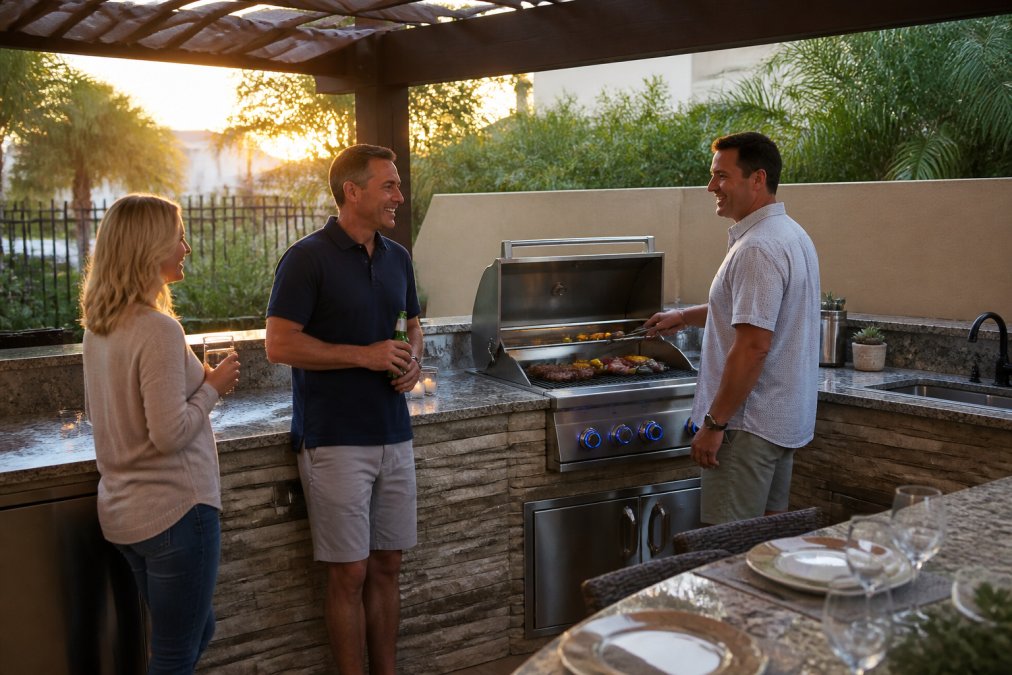
The best custom designs start with a site assessment. A designer should evaluate sun exposure throughout the day, prevailing winds, existing utilities, drainage patterns, and how the kitchen connects to your home's living spaces. An outdoor kitchen that's beautiful but 50 feet from your kitchen door becomes a burden.
Placement matters enormously. East-facing kitchens get morning sun and afternoon shade, which is ideal. West-facing kitchens bake in afternoon heat and need shade structures. North-facing kitchens rarely get direct sun and can feel cold in winter. South-facing kitchens get year-round sun, excellent for winter entertaining but requiring strong summer shade.
Materials should reflect the coastal environment. Stainless steel is necessary for salt air resistance. Porcelain pavers like Rockland-24x24 - 2cm Pavers or Volterra-24x24 - 2cm Pavers handle moisture without deteriorating. Sealed granite or quartz countertops won't absorb salt spray or humidity.
Design integration is where custom work shines. A well-designed outdoor kitchen flows naturally from your indoor living spaces, aligns with your home's architectural style, and creates a functional work triangle between prep, cooking, and serving areas.
Built-in Appliances and Components
The appliances you choose determine functionality and how much you'll actually use the space.
Grills and Cooking Equipment
A built-in grill should match your cooking style. If you're grilling steaks and burgers weekly, a high-BTU gas grill with good heat distribution is essential. If you're cooking for large groups occasionally, you might prioritize grill size over heat intensity. A quality 30-32 inch grill handles most cooking scenarios and fits naturally into residential spaces.
Refrigeration and Storage
A beverage cooler or undercounter refrigerator keeps drinks cold and reduces trips to the indoor kitchen. Outdoor-rated refrigerators are essential; standard indoor units fail quickly in temperature extremes. Drawers and cabinets should be stainless steel or sealed wood to resist moisture and salt air.
Ventilation
A range hood or chimney above your cooking surface removes smoke, grease, and heat. Without ventilation, smoke drifts into adjacent seating areas and your home. Overhead hoods are more effective than downdraft ventilation.
Sinks and Plumbing
An outdoor sink simplifies cleanup and reduces indoor water use. It needs proper drainage, hot and cold water supply, and a foot-controlled or hands-free faucet. Plumbing should be installed by someone experienced with outdoor applications to ensure proper slope, freeze protection, and shutoff valves for winter.
| Component | Purpose | Durability | Maintenance |
|---|---|---|---|
| Built-in Grill | Primary cooking | 10-15 years | Annual cleaning, seasonal inspection |
| Refrigeration | Cold storage | 8-12 years | Regular cleaning, coil maintenance |
| Range Hood | Smoke removal | 10+ years | Filter cleaning, minimal maintenance |
| Outdoor Sink | Prep and cleanup | 15+ years | Winterization, drain maintenance |
| Countertops (stone) | Work surface | 20+ years | Annual sealing, spill cleanup |
Budgeting and Total Cost of Ownership
Many homeowners focus on initial installation cost and miss the real financial picture. Total cost of ownership includes initial materials and labor, plus maintenance, repairs, and eventual replacement over the life of the installation.
A modular outdoor kitchen offers minimal ongoing maintenance beyond occasional cleaning and grill servicing. The trade-off is limited customization and potential component replacement issues.
A custom outdoor kitchen typically involves higher upfront costs but can be tailored to your specific needs and site conditions. The hidden costs emerge over time. Stainless steel requires minimal maintenance. Granite countertops need annual sealing. Concrete pads may crack and require repair. Grills deteriorate and need replacement every 10-15 years.
Maintenance Cost Considerations
Sealed granite countertops require professional sealing periodically. Stainless steel components need minimal cost beyond cleaning supplies. Epoxy grout resists water penetration and doesn't require sealing, while cement grout may need resealing every 2-3 years. Gas line inspection and maintenance should be performed annually for safety certification. Plan for grill replacement every 12-15 years.
Request a Design Consultation →
The cheapest initial installation often becomes the most expensive long-term if materials require constant sealing, repainting, or repair. Porcelain pavers and stainless steel cost more upfront but save money over decades because they don't deteriorate.
Permitting, Installation, and Professional Coordination
Building permits, utility coordination, and professional installation aren't bureaucratic obstacles, they're protections that ensure your kitchen is safe and functions properly.
Permitting Requirements
Most jurisdictions require permits for outdoor kitchens that include gas lines, electrical service, or structural elements like pergolas. Permits typically involve a site plan, gas line routing details, electrical service plans, proof of code compliance, and inspections at various construction stages. Skipping permits might save money upfront, but it creates liability if something fails, voids homeowner's insurance coverage, and causes problems when selling your home.
Gas Line Installation
Gas lines require a licensed plumber or gas fitter. They must be sized correctly for your appliances, sloped properly for drainage, and tested for leaks before use. Improper installation creates safety hazards and performance problems. This isn't a DIY task.
Electrical Service
Outdoor circuits need GFCI (ground fault circuit interrupter) protection to prevent shock hazards. Wiring must be buried or conduit-protected, and outlets must be weatherproof. A licensed electrician ensures everything meets code and functions safely.
Drainage and Grading
Water must drain away from your kitchen and home. If your patio slopes toward the kitchen instead of away, water pools under appliances and causes structural damage. Proper grading and drainage are essential.
Professional Coordination
A custom outdoor kitchen involves multiple trades: masons, plumbers, electricians, and potentially landscape contractors. Coordinating these trades is complex. One trade's work affects another. A general contractor or designer who manages the sequence prevents costly delays and rework.
Outdoor Kitchen Trends and Design Considerations
The outdoor kitchen landscape has shifted significantly in recent years, reflecting both aesthetic preferences and practical lessons learned.
Integration with Living Spaces
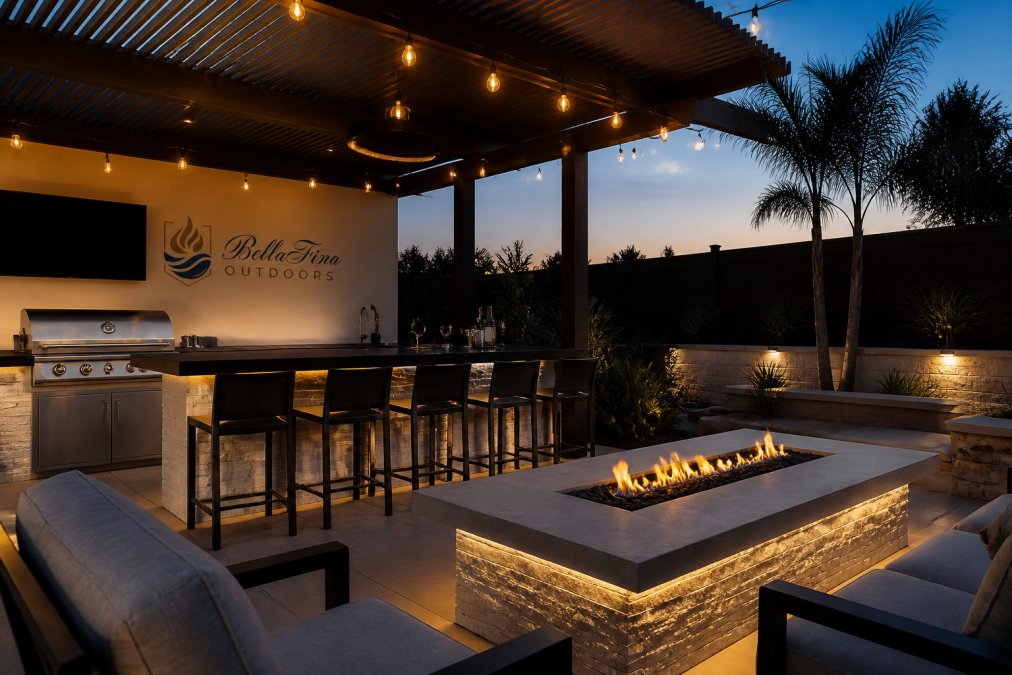
The trend toward blurred indoor-outdoor living means kitchens are designed as extensions of home entertainment rather than isolated cooking stations. This means proximity to seating and gathering areas, covered spaces that allow year-round use, and design cohesion with your home's architecture.
Year-Round Usability
Shade structures, heating elements (fire tables, infrared heaters, or fireplaces), and windbreaks make outdoor kitchens functional in cooler months. A pergola with retractable shade cloth, combined with a fire feature nearby, extends your entertaining season significantly.
Smart Integration
Outdoor lighting controlled by smartphone apps, temperature-controlled refrigeration with alerts, and integrated sound systems are becoming standard in higher-end installations. Smart lighting creates ambiance and security. Automated irrigation around the kitchen prevents dust and maintains landscaping without manual work.
Minimalist Aesthetics
The trend away from ornate, over-decorated outdoor kitchens toward clean lines and functional design reflects maturity in the market. Homeowners are choosing quality materials and thoughtful layout over excessive features they don't use.
Sustainability Considerations
Water-efficient fixtures, native plantings around the kitchen, and energy-efficient appliances appeal to environmentally conscious homeowners. This reduces utility costs and maintenance burden.
Flexible Configurations
Some homeowners are choosing modular or semi-modular setups that can be reconfigured as needs change, reflecting the reality that entertaining patterns and preferences evolve.
The common thread across these trends is functionality and integration. The best outdoor kitchens work seamlessly with how you actually live.
Planning an outdoor kitchen requires balancing aesthetics, functionality, budget, and the realities of your specific site. The decisions you make about materials, appliances, and design determine not just how the space looks, but whether you'll actually use it and how well it performs over time.
At BellaFina Outdoors, we help homeowners and contractors navigate these choices through expert design guidance and access to premium products that stand up to the demands of outdoor living. Our design and visualization services let you see how your kitchen will look and function before construction begins. Visit our Huntington Beach design center to explore materials, discuss your project with our team, or request a design consultation to bring your outdoor kitchen to life.
Frequently Asked Questions
What are the main differences between modular and custom outdoor kitchens?
Modular outdoor kitchens come pre-designed with standard components you assemble on-site, offering faster installation and lower upfront costs. Custom outdoor kitchens are built to your exact specifications, incorporating your preferred materials, layout, and appliances. Custom designs provide better integration with your backyard's unique dimensions and aesthetic, while modular systems work well for smaller spaces or budget-conscious projects. The choice depends on your timeline, budget, and how precisely you want the kitchen to fit your outdoor living space.
How do I choose the right materials for outdoor kitchen durability in coastal areas?
Coastal climates demand weather-resistant materials that withstand salt spray, humidity, and temperature fluctuations. Porcelain pavers like those offered by BellaFina Outdoors (such as Quarstone, Rockland, and Slaterock) provide excellent durability and low maintenance. For countertops, consider concrete, granite, or engineered stone sealed for outdoor use. Stainless steel appliances and hardware resist corrosion better than standard finishes. Avoid untreated wood and porous stone. Professional-grade materials cost more initially but require less frequent replacement and maintenance, making them better long-term investments for outdoor kitchen material durability.
What should I expect when working with a local design center for custom outdoor kitchen design?
A reputable design center like BellaFina Outdoors provides consultation, product selection guidance, and visualization services to help you see your project before construction. The process typically includes site assessment, design options with realistic renderings, material sampling, and coordination with your contractors. This approach reduces costly changes during installation and ensures your vision translates accurately to your finished space. Many design centers also help navigate permitting requirements and can recommend trusted installation professionals familiar with local codes and climate considerations.
How much should I budget for an outdoor kitchen project?
Outdoor kitchen costs vary widely based on size, materials, and complexity. Modular systems start lower, while custom builds range significantly higher depending on appliances, finishes, and site preparation. Beyond the kitchen itself, factor in hardscaping (pavers like BellaFina's options start at $3.42-$3.95 per square foot), gas and electrical work, permitting, and labor. Professional installation typically adds 30-50% to material costs. Consider total cost of ownership: premium materials cost more upfront but last longer and require less maintenance, making them more economical over 10-15 years than cheaper alternatives that degrade faster in outdoor conditions.
This article was written using GrandRanker