
Table of Contents
- Saratoga Pavers or a Custom Design Center: Which Fits Your Project?
- What Saratoga Pavers Offers for Hardscape Projects
- What a Custom Design Center Brings to the Table
- The Role of Outdoor Living Design Services in Complex Backyards
- Hardscape Material Selection Guide: Stock Options vs. Curated Choices
- Why Custom Outdoor Kitchen Planning Needs More Than Pavers
- The Benefits of 3D Outdoor Space Visualization Before You Build
- How to Choose: Project Scope, Design Support, and Integration
- Frequently Asked Questions
Last Updated: September 5, 2026
Saratoga Pavers or a Custom Design Center: Which Fits Your Project?
Choosing between Saratoga Pavers and custom design centers comes down to whether you need a material supplier or a project partner. Saratoga Pavers is a manufacturer of precast concrete pavers, while custom design centers like Bellafina Outdoors provide a curated product selection paired with design and visualization support. The right choice depends on your project scope, aesthetic goals, and how much design guidance you want before construction begins.
Most projects start with a simple question: where do I buy the hardscape materials? That is the right starting point, but the decision runs deeper. The path you choose shapes everything from material selection to how smoothly your paver installation integrates with your outdoor kitchen, fire pit, and landscape lighting.
What Saratoga Pavers Offers for Hardscape Projects
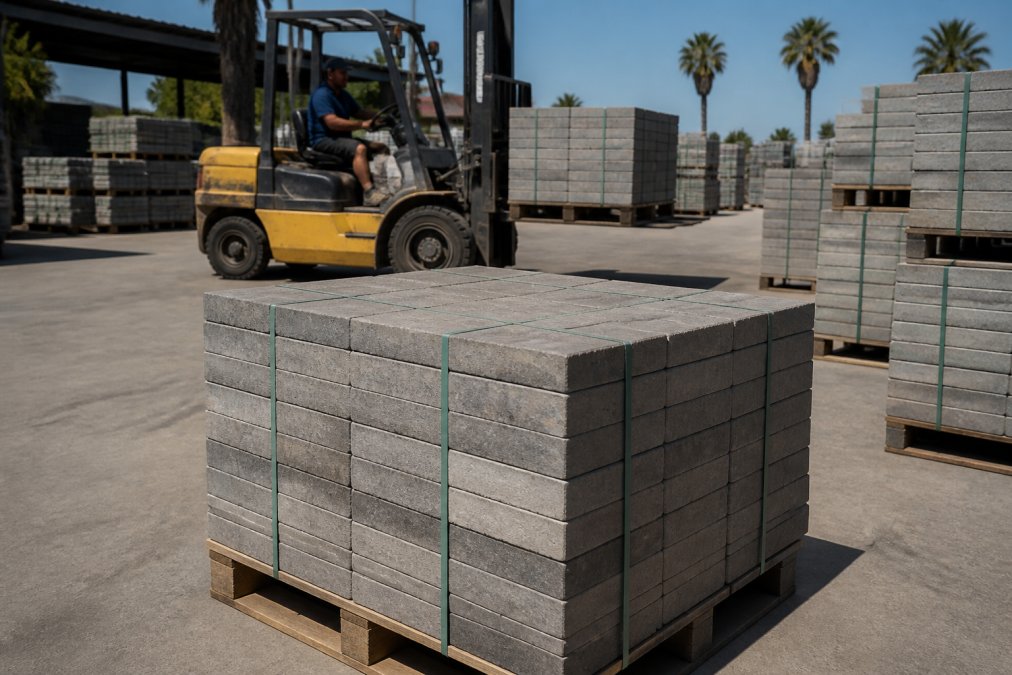
Saratoga Pavers manufactures interlocking concrete pavers, retaining wall blocks, and related hardscape products. Their catalog is built around pre-engineered, mass-produced units offering consistent quality and a predictable price point. For straightforward projects like a driveway, walkway, or patio, their product line performs well and is widely specified by hardscape contractors.
The main advantage is efficiency. Because the pavers are manufactured to exact tolerances, installation follows a proven playbook. Contractors know how these units behave, and drainage, edge restraints, and sealing are well-documented. The trade-off is aesthetic range: stock options repeat across neighborhoods, and the design ceiling is set by what the factory produces.
What a Custom Design Center Brings to the Table
A custom design center takes a different starting point. Instead of asking which paver you want, it asks what the finished space should feel like and how it will function. At Bellafina Outdoors in Huntington Beach, the focus is on pairing premium materials with expert guidance so your hardscape, outdoor kitchen, fire features, and lighting work as one cohesive system.
Where Saratoga Pavers excels at manufacturing, design centers excel at curation and integration. You gain access to materials not typically stocked by big-box retailers, including large-format porcelain pavers and natural stone like Crema Marble with a leathered finish. A 24x24 porcelain paver, for instance, creates a clean, modern look with fewer grout lines, reading as more architectural and less like a traditional patio.
The Role of Outdoor Living Design Services in Complex Backyards
Outdoor living design services matter most when your project involves more than a single surface. A backyard with a pool deck, a covered outdoor kitchen, a retaining wall, and a fire pit requires coordination that a paver catalog alone cannot provide. The design process forces decisions about grading, drainage, and site conditions before you commit to materials.
The site assessment comes first. Before any material is selected, the design conversation starts with what is already on the ground. In coastal Orange County, that means asking about soil type, drainage patterns, and property lines. Clay-heavy soils, common inland, behave differently under a paver base than the sandy loam found nearer to Huntington Beach. A design center working with local contractors daily can flag these variables early.
Grading and drainage are design decisions, not afterthoughts. A paver patio that slopes toward the house is a failure no matter how beautiful the material. The design phase routes surface water away from foundations, toward drainage infrastructure, or into a rain garden. In a complex backyard, the paver field, retaining wall, and outdoor kitchen pad must all shed water in a coordinated way.
Retaining walls introduce structural questions that pavers alone do not answer. A wall system must be engineered for the height of retained soil and the load it carries. California building codes typically require a permit for walls above a certain height, and the design phase is where that surfaces (dgs.ca.gov). A design center can help you understand options, but engineering and permitting belong to your contractor or a licensed structural engineer.
The sequencing of trades matters more than most homeowners realize. The pool contractor, electrician, plumber, and hardscape crew all share the same space. A design center that works with trade professionals daily understands this choreography. Selecting materials and finalizing a layout before construction reduces the risk of a lighting fixture being buried under a paver base or a gas line conflicting with a footing.
The aesthetic vision needs an owner. A manufacturer supplies a component; a design center helps you compose the whole scene. When planning a custom outdoor kitchen, the countertop, paver field, fire feature cladding, and lighting all need to speak the same visual language. Design services connect those dots so the space feels intentional rather than assembled.
Complex backyards reward a design-led approach because rework is costly. Moving a gas line, re-grading a paver field, or rebuilding a poorly engineered retaining wall costs far more than upfront planning. A custom design center in Huntington Beach helps you avoid those outcomes by aligning materials, site conditions, and vision before the first shovel breaks ground. This is where outdoor living design and visualization services earn their keep, translating your ideas into a concrete plan that also incorporates outdoor kitchens, fire features, and pool equipment automation as part of the whole composition.
Hardscape Material Selection Guide: Stock Options vs. Curated Choices
The practical difference between stock and curated materials comes down to format, finish, and pattern flexibility. Stock concrete pavers arrive in fixed sizes and surface textures. Curated options, such as the stone and porcelain lines at Bellafina Outdoors, include varied formats and patterns for more distinctive installations.
| Consideration | Stock Concrete Pavers | Curated Stone & Porcelain |
|---|---|---|
| Format range | Fixed factory sizes | Large-format and multi-size |
| Surface finish | Molded texture | Leathered, honed, textured |
| Pattern options | Limited by unit size | Versailles, Roman, custom |
| Aesthetic ceiling | Repetitive across projects | Distinctive, architectural |
| Best for | Budget-driven, simple patios | Design-forward outdoor living spaces |
Two additional factors, material sourcing and lifecycle performance, are increasingly important in California and rarely appear in paver marketing materials.
Material sourcing and environmental impact. Concrete pavers are a manufactured commodity made from cement, aggregate, and water. Their carbon footprint is tied to energy-intensive cement production and transport weight. Natural stone is quarried and fabricated, with its own extraction and shipping considerations. Porcelain pavers are fired from clay and minerals at high temperatures, and their thin profile means less material by weight than concrete.
Request a Design Consultation →
No hardscape material is impact-free. The more useful question is longevity and repairability. A natural stone patio lasting 30 years that can be reset in sections may have a lower lifecycle impact than a concrete paver needing replacement after 15 (the EPA). Porcelain offers high durability and stain resistance, reducing chemical cleaner use. Ask your design consultant about lifespan and maintenance, not just the upfront profile.
Thermal performance matters in Southern California. Dark concrete pavers absorb heat and radiate it into the evening. Lighter stone and porcelain reflect more solar energy, which matters for pool decks and west-facing patios. The leathered finish on Crema Marble also affects how the surface feels underfoot. These differences are not obvious from a small sample, so a full-size display or mockup is worth the effort.
Pattern flexibility changes the visual weight of the space. Stock pavers are typically installed in running bond or herringbone because unit size limits layout. Curated stone and porcelain lines open up Versailles patterns, large-format grids, and multi-size Roman layouts. The trade-off is that larger formats require a flatter, more carefully prepared base, which is a consideration for your contractor's bid.
The cost conversation is about value, not just unit price. Stock pavers have a lower per-square-foot cost, but the finished space reflects that investment. Curated stone and porcelain carry a higher unit cost yet change the character of the outdoor room in ways standard concrete cannot match. For a homeowner planning decades of use, the difference is often justified by daily experience. For a contractor, the curated option can be the differentiator that wins the project.
Material sourcing also differs. Concrete pavers are a manufactured commodity. Natural stone and porcelain pavers, like the 12 X 24 X 1 1/4" Crema Marble Leathered Finish Paver, carry a different provenance and visual weight. If curb appeal and long-term character matter, the curated route justifies its higher unit cost through the quality of the finished space.
Why Custom Outdoor Kitchen Planning Needs More Than Pavers
An outdoor kitchen is the most demanding element in a hardscape project because it brings together gas, electrical, and structural requirements that pavers do not address. Planning requires thinking about countertop overhangs, appliance clearances, ventilation, and weight load on the base pad. The paver below your feet is part of the system, but not the system itself.
A design center carrying outdoor kitchen equipment, fire features, and architectural finishes provides a clear advantage over a paver-only supplier. You can select the grill, fire feature, and countertop in the same room with someone who understands how the pieces integrate, avoiding the common failure where a beautiful patio is undermined by a poorly planned kitchen. Brands like The Outdoor Plus fireplaces and fire & water features are part of the curated lineup that helps tie the hardscape to the living space.
The Benefits of 3D Outdoor Space Visualization Before You Build
The single biggest advantage of working with a custom design center is seeing your project before it is built. 3D visualization turns a two-dimensional paver layout into a realistic rendering of your actual backyard with your chosen materials, kitchen configuration, and lighting plan. This eliminates the guesswork that leads to expensive change orders.
For homeowners, renderings answer the question no catalog can: will this feel right in my space? For contractors and pool builders, visualization aligns the client, designer, and build crew on a single version of the project before a paver is laid, reducing friction and protecting the timeline. When grounded in real product specifications, what gets built matches what was approved.
How to Choose: Project Scope, Design Support, and Integration
Start with your project scope. If you are replacing a plain concrete slab with a modest paver patio and already know the exact paver you want, a direct manufacturer purchase may serve you well.
The calculus shifts when your project involves multiple elements or when you are investing in a space you intend to enjoy for decades. For projects combining hardscape with an outdoor kitchen, fire pit, lighting, or pool renovation, the value of design support grows significantly. A design center like Bellafina Outdoors brings premium products, expertise, and visualization tools into one place, including outdoor lighting and Jandy pool equipment and automation for a fully integrated backyard.
Saratoga Pavers and a custom design center are not always direct competitors. One is a manufacturer of a specific product category; the other is a resource for composing an entire outdoor living space. For a full backyard transformation in Orange County, the value of seeing your project rendered in 3D with real materials far outweighs the convenience of a single-source purchase. Visit the Bellafina Outdoors design center in Huntington Beach to explore premium materials and start your project with a clear vision, or request a design consultation.
Frequently Asked Questions
What is the main difference between a paver contractor and an outdoor living design center?
A paver contractor or manufacturer like Saratoga Pavers focuses on the production and installation of hardscape materials such as interlocking pavers and retaining walls. An outdoor living design center offers a broader service: it provides a curated selection of materials, outdoor kitchen components, fire features, and architectural finishes, along with design and visualization support. For a complex backyard renovation that integrates multiple elements, a design center helps you plan the whole space before a contractor starts the paver installation.
Why is 3D visualization important before starting a hardscape project?
3D visualization turns a flat plan into a realistic rendering of your future outdoor living space. It lets you see how concrete pavers, natural stone, an outdoor kitchen, and landscape lighting will look together before you break ground. The benefits of 3D outdoor space visualization include catching design flaws early, confirming material choices, and giving your contractor a clear project plan. This reduces the risk of costly changes and mismatched expectations during paver installation.
Can I buy premium pavers and design services together?
Yes. A custom design center like BellaFina Outdoors lets you select premium materials and pair them with expert design guidance in one place. For example, you can choose a specific paver, like a 16 X 24 inch Crema Marble leathered finish paver, and see how it works with your outdoor kitchen and fire feature plans. This integrated approach simplifies custom outdoor kitchen planning and ensures every element of your project is coordinated.
What should I look for in a hardscape material selection guide?
A good hardscape material selection guide compares options based on durability, maintenance, aesthetics, and how they fit your specific site conditions. It should cover the differences between concrete pavers, porcelain pavers, and natural stone. Look for guidance on thickness, finish, and pattern, like a Roman or Versailles pattern. The goal is to choose materials that offer structural integrity and match your design vision for patios, walkways, and driveways.
This article was written using GrandRanker